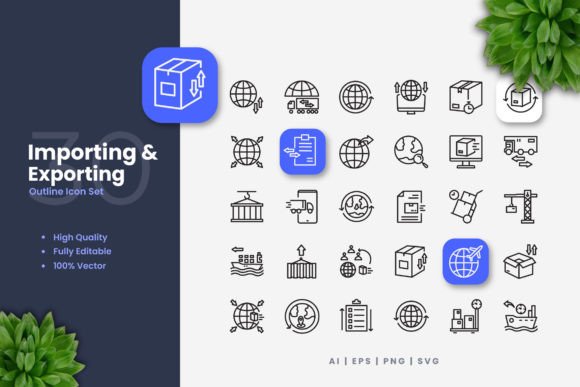
Importing and Exporting Icons for Graphic Design
As a designer who regularly works with branding, marketing visuals, and packaging, I recently came across the Importing and Exporting Icons design asset. This collection of simple and clean icons immediately caught my attention for its versatility and adaptability in various design contexts. When considering a real client project, such as a handmade brand’s product launch or a small business’s seasonal campaign, it's essential to evaluate how an asset like this can support the visual direction and contribute to the final result.
A First Impression: Clean Lines and Modern Aesthetic
The first thing that stands out about Importing and Exporting Icons is the clean, modern aesthetic. These icons are designed with minimal detail but convey clear meaning, making them ideal for projects where clarity and simplicity are key. The use of consistent stroke weights and subtle outlines gives them a professional feel, which aligns well with branding efforts that aim for a polished look.
These icons naturally fit into a wide range of creative design scenarios—from digital product mockups to printable designs. They offer a sense of order and precision that can be especially useful in social media graphics, editorial design, or even Cricut projects. Their style is reminiscent of minimalist design trends, which are popular among handmade businesses and small brands looking to establish a cohesive visual identity.
Real-World Applications in Client Projects
When working on a recent project for an Etsy shop selling handmade stationery, I considered using these icons for product labels, packaging design, and promotional materials. The ability to resize, change color, or edit stroke weight made them highly adaptable to different needs. For instance, they could be used as decorative accents on product mockups or as part of a themed collection for a seasonal campaign.
In a branding context, these icons could serve as supporting brand elements in logo design or as part of a larger brand identity system. They also work well in marketing visuals, such as Pinterest pins or Instagram posts, where visual hierarchy and readability are crucial. Their scalability makes them suitable for both large layout areas and smaller details, like stickers or t-shirt design.
For digital products, such as Canva templates or web design assets, the Importing and Exporting Icons provide a reliable base that can be customized to match specific brand colors or styles. They're also great for print-on-demand sellers, as they maintain quality when printed on merchandise like mugs, tote bags, or wall art.
Where These Icons Shine and Where to Use Them Carefully
These icons perform best in environments where visual clarity and consistency are important. They excel in hero graphics, product mockups, and campaign visuals. Their clean lines make them ideal for use in large layout areas or as part of a decorative accent in a design composition.
However, there are situations where caution is needed. In crowded layouts or complex backgrounds, their simplicity might get lost or appear too minimalistic. They may not be the best choice for projects that require very clean visual hierarchy or for professional corporate materials where a more refined approach is expected.
Additionally, while these icons are versatile, they should be tested in black and white to ensure they remain legible without color. It's also important to check contrast on both light and dark backgrounds, preview them at small and large sizes, and review file formats—especially if SVG or PNG transparency is required for commercial design purposes.
Design Considerations for Commercial Use
Before incorporating Importing and Exporting Icons into a client project, it's crucial to confirm that they come with a commercial license. This is especially important for digital sellers, print-on-demand platforms, or any project involving commercial design assets. Reviewing the file formats and ensuring that the icons are editable in vector software will also help maintain flexibility during the design process.
Testing these icons alongside different font styles—such as serif, sans-serif, script, handwritten, or display fonts—can help determine how well they integrate into the overall typography. Ensuring that they complement the chosen typeface and don’t clash visually is key to maintaining a cohesive design.
Another practical note is to test the icons in print. Checking the print quality and how they render on different substrates—like paper, fabric, or vinyl—will ensure that they meet the expectations of the final product, whether it's a sticker design, packaging, or sublimation design.
Final Thoughts: A Useful Asset for Professional Design Work
Importing and Exporting Icons is a valuable graphic design asset that can enhance a variety of projects. Whether you're designing for a small business branding initiative, a handmade product line, or a digital marketplace presence, these icons offer a reliable foundation that can be tailored to suit your needs.
They’re particularly useful for those working with print-on-demand services, Cricut projects, or creating content for social media platforms. However, as with any design element, it's important to consider how they fit within the broader visual narrative of the project and ensure they contribute positively to the final outcome.
If you're looking for a design bundle that offers flexibility, modern appeal, and practicality, Importing and Exporting Icons could be a solid addition to your creative toolkit. Just remember to test them thoroughly and confirm licensing before using them in a commercial setting.